AC
Loading
Mission Education Experience Projects Clinical Contact

Neural Engineer · Aspiring Neurosurgeon

Amith Chitneni

Mission

Unified Rehabilitation:
Bridging Neurotechnology & Medicine


I am driven by a singular goal: to make neural rehabilitation more seamless, integrated, and human-centered.

This mission is deeply personal. After my father was involved in a near fatal hit-and-run accident, I saw how fragmented neural rehabilitation can be — spread across multiple surgeons, physicians, and engineers with little continuity. His recovery was a disruptive and disjointed process.

I aim to become a physician-engineer who both designs neurotechnology and implants them in the operating room. My goal is to eliminate fragmented care and create a unified rehabilitation experience where innovation directly improves patient outcomes.

Education

Case Western Reserve University

2022–2026


Bachelor of Science in Engineering, Biomedical Engineering
Master of Science in Engineering, Biomedical Engineering GPA: 4.00 / 4.00
Relevant Graduate Courses:
Movement Biomechanics & Rehabilitation · Bioelectric Phenomena · Neural Circuits · Methods of Neuroscience Research · BioMEMS · Nanomedicine
Teaching Assistant:
Circuits & Instrumentation · Biomedical Materials
Tau Beta Pi Honors Society

Work Experience


COSMIIC / Open Neurotech

2025 - Present


Neurorehabilitation Engineer Intern

Worked on a modular, implantable neuroprosthetic system for restoring motor function in spinal cord injury patients. As part of an NIH-funded open-source project, I designed stimulation and recording circuits in KiCad and evaluated system performance in MATLAB/Simulink.

Focused on electrode-driven stimulation of peripheral nerves and muscles. Tuned waveform parameters including amplitude, pulse width, and frequency to achieve consistent and selective activation. Tested how changes in stimulation affected EMG responses and used those results to refine parameters.

The system used a distributed implant architecture with multiple interconnected modules. I analyzed how signals moved between sensing, processing, and stimulation units and how those interactions affected overall performance.

Also worked alongside orthopedic surgeons during implantation procedures. Observed and contributed to electrode placement and intraoperative parameter adjustments, connecting circuit design decisions to real clinical outcomes.
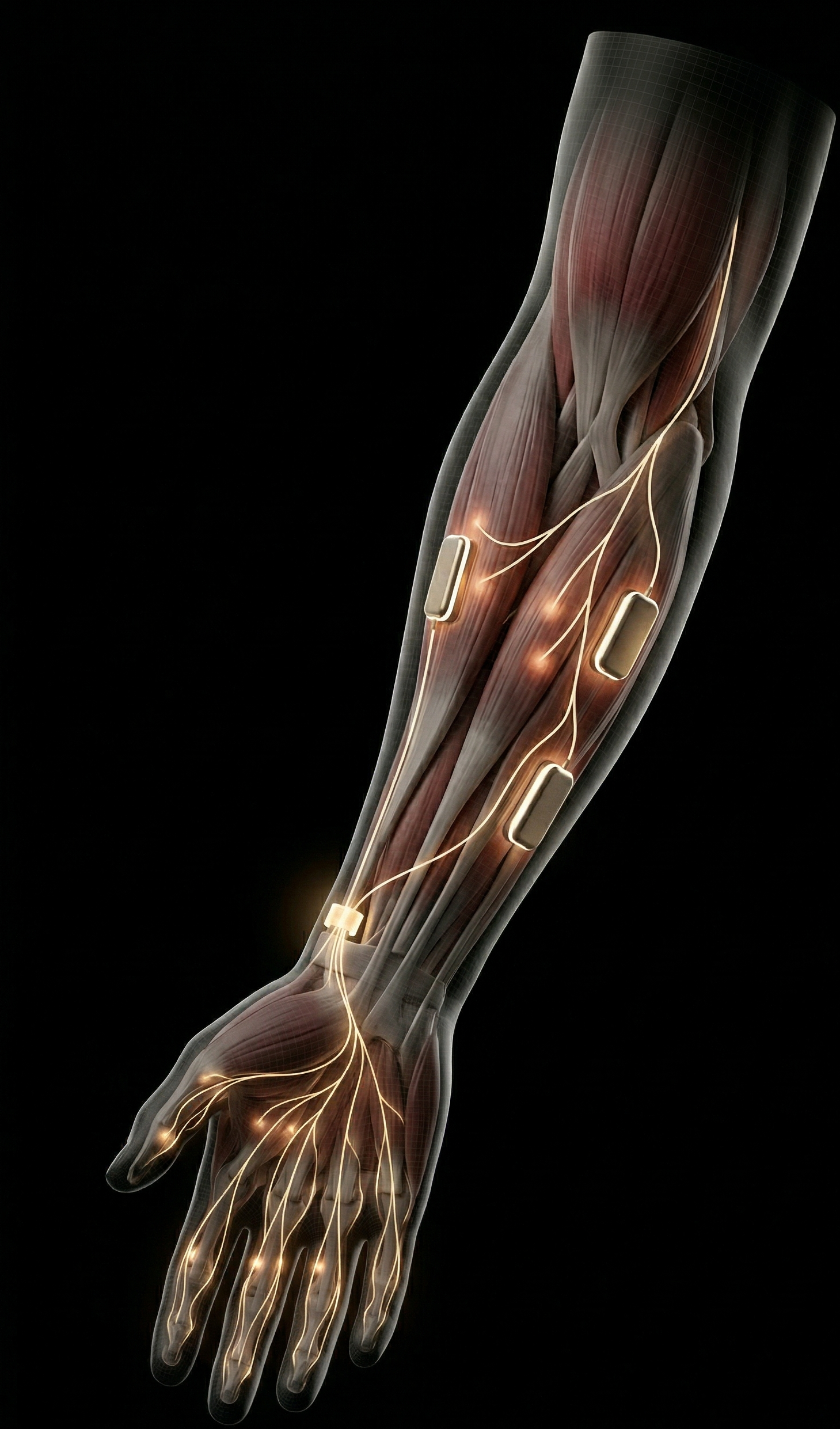
COSMIIC implantable neurostimulation system - 3D render of forearm with neural prosthetic modules
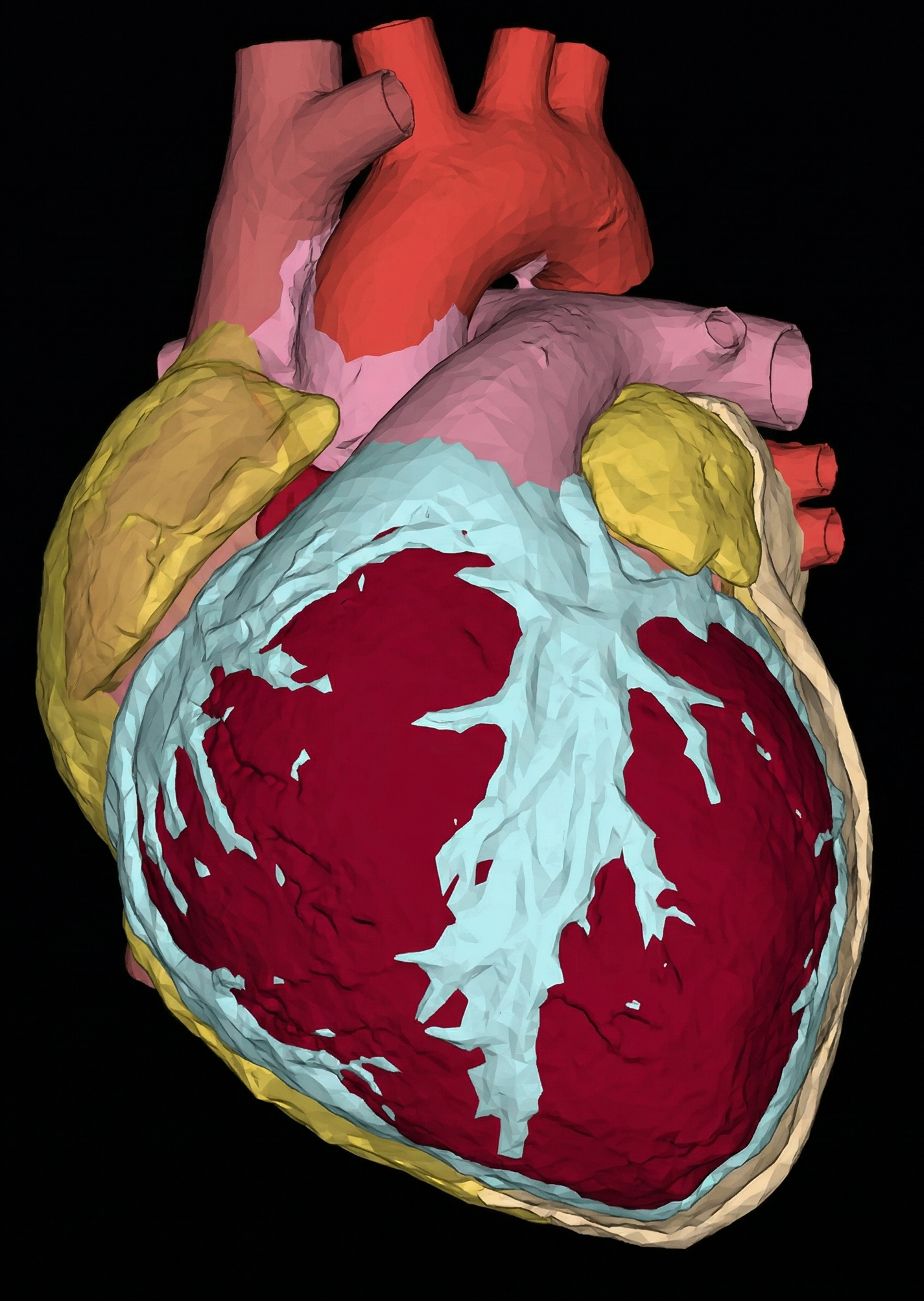
3D segmented heart reconstruction showing epicardial and paracardial fat tissue

CWRU School of Medicine — Center for Imaging

2024–2025


Deep Learning of Cardiovascular Imaging Research Assistant

Worked on a deep learning pipeline (DeepFat) for automated segmentation of epicardial adipose tissue (EAT) from non-contrast cardiac CT scans to support prediction of major adverse cardiovascular events (MACE). Used Python to evaluate segmentation accuracy and improve model performance.

Applied preprocessing techniques to improve detection of the pericardium. Used a Hounsfield Unit attention window and reordered CT slices by splitting the heart into upper and lower halves, improving consistency of anatomical features during training.

Contributed to scaling the model across large CT datasets and improving robustness across variable image quality. Evaluated segmentation outputs against manual labels using metrics such as Dice score and volumetric error.

Used extracted EAT measurements for downstream clinical analysis. Applied time-to-event modeling and Cox proportional hazards regression to assess MACE risk, linking imaging-derived features to patient outcomes.

CWRU Department of Macromolecular Engineering

2023–2024


Nanocomposite and Benzoxazine Research Assistant

Synthesized and characterized a benzoxazine-based copolymers for use in high-performance, biocompatible medical implants and biosensors. Followed multi-step polymerization and purification protocols to produce consistent material properties.

Operated and analyzed FT-IR, DSC, and TGA to confirm polymerization and evaluate thermal and chemical behavior. Interpreted spectra and thermal profiles to assess crosslinking, stability, and degradation characteristics.

Evaluated key material properties including dielectric behavior, hydrophobicity, char yield, and flame resistance, relating these to performance in implantable and high-reliability systems.

Developed a deep understanding of nanocomposite design principles, including how polymer composition and structure influence mechanical, thermal, and functional properties at the nanoscale.
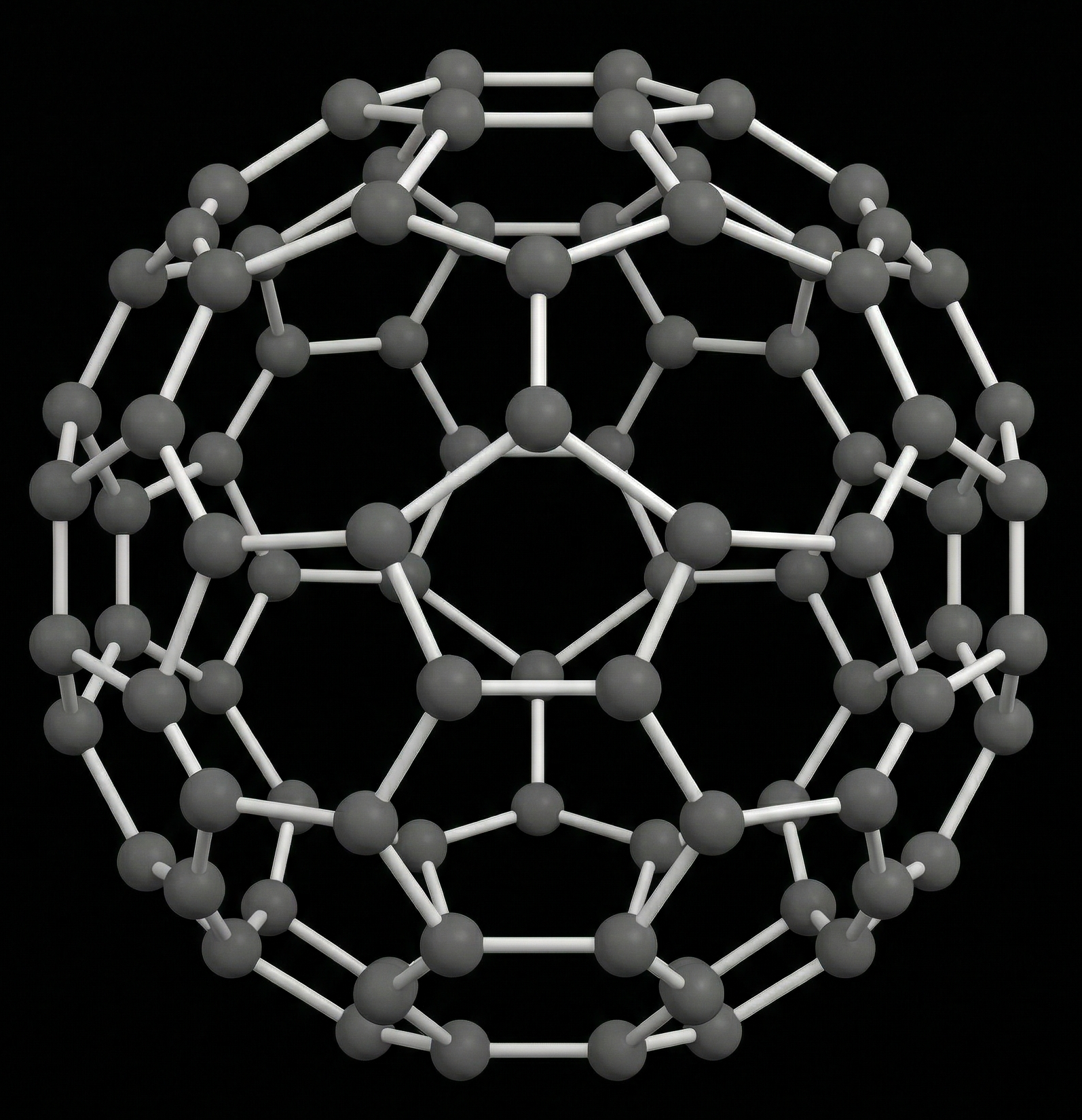
Fullerene C60 buckyball nanocomposite structure

Neural Engineering & Rehabilitation Projects


Selective Stimulation of Sensory Fascicles in the Ulnar Nerve for Amputees

Developed a 3D COMSOL model of the ulnar nerve with anatomically segmented fascicles to study selective sensory activation for amputee prosthetics.

Simulated nine stimulation conditions combining electrode placements (extraneural, interfascicular, intrafascicular) and configurations (monopolar, bipolar, tripolar) to evaluate selective activation of a target sensory fascicle.

Integrated COMSOL voltage outputs into a McIntyre–Richardson–Grill axon model in NEURON to simulate myelinated fiber activation under extracellular stimulation.

Performed amplitude sweeps and selectivity analysis in Python to identify optimal electrode placement and configuration for maximizing sensory selectivity.

Demonstrated that multipolar intrafascicular stimulation provides the highest spatial selectivity by confining current spread to target fascicles.

Adaptation of Peripheral Muscle Stimulation Electrodes to Intracranial Applications

Designed a biodegradable PLGA-PCL composite coating to enable peripheral stimulation electrodes to function in intracranial environments.

Engineered a dual-function coating combining ROS-scavenging chemistry with controlled release of neuroprotective factors such as BDNF and IL-10 to mitigate inflammation and support neuronal survival.

Tuned material properties including polymer composition and degradation kinetics to achieve sustained therapeutic release during peak neuroinflammatory response.

Proposed scalable fabrication methods including dip-coating and low-temperature crosslinking compatible with existing electrode manufacturing pipelines.

Developed a comprehensive experimental framework including degradation studies, neuron–glia co-culture assays, and in vivo implantation with electrochemical and histological evaluation.

Comparative Analysis of Simulated vs. Ex-Vivo Neural Stimulation in Rat Brains

Developed a 3D COMSOL Multiphysics model of a rat brain with anisotropic conductivity to simulate and validate electric field propagation.

Modeled dual-electrode cortical stimulation using ±0.1–0.2 mA charge-balanced pulses at 100 Hz with a 200 µs pulse width, matching parameters between simulation and experiment.

Conducted ex-vivo validation experiments using voltage-sensitive dye Di-4-ANEPPS at 20 µM to visualize spatial depolarization patterns following electrical stimulation.

Built a custom Arduino-controlled pulsed stimulation system and quantified activated regions using FIJI-based color thresholding and area extraction.

Performed one-sided t-test statistical comparison across multiple trials to evaluate agreement between simulated and experimentally observed activation regions.

Computer Control System for Cervical Spinal Cord Injury Patients

Developed a hybrid EMG and infrared assistive control system enabling individuals with C6 spinal cord injuries to perform computer interaction.

Designed a signal acquisition and processing pipeline using bilateral EMG to classify user intent for discrete click commands, integrated with infrared-based positional tracking for continuous cursor control.

Defined functional requirements (accuracy, latency, robustness) and technical specifications for sensor integration, signal thresholding, and microcontroller interfacing.

Completed IRB documentation and established verification and validation protocols, including a quantitative dexterity-based testing framework to evaluate system accuracy and response time.

Engineered a low-cost, scalable assistive interface emphasizing reliability and accessibility for individuals with severe upper-limb motor impairment.

Clinical & Volunteer Experience


MetroHealth Department of Emergency Medicine & Dermatology: Medical Scribe

2023–2024

Accumulated over 1,500 hours of scribing experience in a Level I trauma center, documenting high-acuity cases including blunt force trauma, gunshot wounds, pulmonary embolisms, and acute cardiac events.

Worked alongside emergency physicians to translate real-time patient encounters into structured medical records, synthesizing histories, physical exams, imaging, and clinical reasoning under time pressure.

Completed over 750 hours in dermatology with the department chair, documenting and observing 200+ Mohs micrographic surgeries for skin cancers including basal cell carcinoma, squamous cell carcinoma, and melanoma.

Gained exposure to longitudinal care, surgical technique, and the integration of pathology into real-time procedural decisions.

University Hospitals Seidman Cancer Center: Infusion Courier

2024–2025

Transported lab specimens between the Core Lab, Blood Bank, and outpatient oncology facilities, ensuring timely processing of tests critical for chemotherapy planning and patient monitoring.

Contributed to improved workflow efficiency and reduced turnaround times within a high-volume cancer treatment environment.

Provided direct patient support during infusion treatments by engaging in conversation, reading to patients, and offering emotional reassurance during extended treatment sessions.

Developed a deeper understanding of the patient experience in oncology, emphasizing the importance of empathy, presence, and human connection in clinical care.

Contact

Get In Touch

Interested in neural engineering, medicine, collaboration, or research opportunities? Let's connect!


LinkedIn

amithchitneni

Email

amith1455@gmail.com

© 2026 Amith Chitneni